
Views: 0 Author: Site Editor Publish Time: 2026-10-07 Origin: Site


Structural integrity dictates tent design success. Failure in extreme weather or high-stress environments is simply not an option. Original equipment manufacturers and gear designers face a constant challenge. They must balance strength-to-weight ratios, tight dimensional tolerances, and scalable manufacturing when sourcing structural components. A snapped pole during high winds compromises the entire shelter system, leading to product returns and brand damage. Engineering teams must specify materials and processes that guarantee performance under dynamic loads.
Understanding the end-to-end manufacturing process is essential. From raw billet to finished, fabricated pole, knowing how aluminum tent tubing is made allows teams to evaluate supplier capabilities effectively. This knowledge mitigates supply chain risks and optimizes product design. Buyers who understand extrusion mechanics, drawing tolerances, and secondary fabrication limits can design better products and source them more efficiently.
Alloy Selection Dictates Performance: The choice between 6000-series and 7000-series aluminum fundamentally alters extrusion parameters, yield strength, and final application suitability.
Extrusion vs. Drawing: Understanding the difference between direct extrusion and cold drawing is critical for specifying wall thickness and dimensional accuracy.
Secondary Fabrication Complexity: Producing a reliable custom bent tent pole or precision-drilled assembly requires specialized tooling to prevent material fatigue and structural compromise.
Supplier Consolidation: Partnering with a manufacturer capable of handling both raw extrusion and custom aluminum tent pole production reduces lead times and quality control inconsistencies.
Environmental factors dictate the required mechanical properties of structural tubing. Wind loads demand high yield strength to prevent permanent deformation when gusts hit the broad side of a tent. Snow loads require stiffness to resist buckling under static downward pressure. Corrosion exposure, particularly in coastal or humid environments, necessitates specific alloy choices to prevent material degradation over time. Engineers must define these success criteria before selecting an alloy, as the base material dictates every subsequent manufacturing step.
The 6000 series alloys, primarily 6061 and 6063, rely on magnesium and silicon as their major alloying elements. These materials offer high corrosion resistance and excellent extrudability. They accept surface treatments like anodizing exceptionally well, resulting in a smooth, consistent finish. Manufacturers frequently specify 6000 series aluminum for larger, structural event tents, glamping setups, and heavy-duty car camping shelters. In these applications, absolute weight reduction is secondary to structural rigidity, ease of fabrication, and cost efficiency.
The 7000 series alloys, such as 7001 and 7075, utilize zinc as the primary alloying element. This addition significantly increases the material's yield strength. These alloys provide a superior strength-to-weight ratio. They represent the industry standard for lightweight backpacking, mountaineering, and expedition tents. The high tensile strength allows manufacturers to reduce wall thickness, shedding critical ounces without sacrificing the pole's ability to flex and recover under heavy wind loads.
Designers must weigh the machinability of high-strength alloys against required performance metrics. 7000 series aluminum requires more force to extrude than 6000 series. It also wears down extrusion dies faster due to its inherent hardness. However, the ability to use thinner walls often offsets the raw material volume by reducing the total weight of aluminum required per pole.
Alloy & Temper |
Yield Strength (MPa) |
Ultimate Tensile Strength (MPa) |
Primary Application |
|---|---|---|---|
6063-T6 |
214 |
241 |
Light structural frames, awnings |
6061-T6 |
276 |
310 |
Heavy-duty event tents, glamping |
7075-T6 |
503 |
572 |
Expedition tents, tactical shelters |
7001-T6 |
600 |
675 |
Ultralight backpacking poles |
Engineering teams must calculate the exact load requirements of the tent architecture to determine if the premium for 7000 series alloys is justified. Switching from a 6061 tube to a 7075 tube might allow a designer to drop the wall thickness from 1.2mm to 0.8mm, achieving the same structural integrity while cutting the component weight significantly.
Extrusion transforms solid metal into functional profiles. The process begins with billet preparation. Aluminum logs, known as billets, undergo precise heating in a furnace. The metal reaches a malleable temperature, typically between 400°C and 500°C, depending on the specific alloy. This heating softens the aluminum without allowing it to reach its melting point, maintaining its solid state for the physical pushing process. Proper homogenization of the billet prior to heating ensures a uniform grain structure, which prevents tearing during extrusion.
A massive hydraulic press forces the heated billet through a pre-cast steel die. The die opening matches the desired cross-section of the tube. For hollow profiles like tent poles, manufacturers use a porthole die. The aluminum separates to flow around an internal mandrel before welding back together under extreme pressure within the die chamber. This creates a seamless, continuous tube with a solid internal weld seam.
Manufacturers produce standard round tubes, oval profiles, or complex custom-shaped tubing based on aerodynamic or structural requirements. Oval profiles offer increased rigidity in a specific direction, making them ideal for hoop-style tent designs facing directional wind loads. The die design dictates the exact outer diameter and internal structure of the extrusion. Tooling engineers must account for thermal expansion and contraction, designing the die slightly larger than the final required dimensions.
Industry standard outer diameter (OD) and inner diameter (ID) dimensions exist for most camping applications. Utilizing off-the-shelf tooling saves initial setup costs and reduces lead times. Standard sizes include:
7.9mm to 8.5mm: Ultralight one-person backpacking tents.
9.0mm to 9.5mm: Standard two-to-three person dome tents.
11.0mm to 13.0mm: Four-season mountaineering and basecamp tents.
16.0mm to 25.0mm+: Large family tents and commercial event structures.
An OEM should invest in custom extrusion dies only when proprietary structural requirements, unique locking mechanisms, or specific aerodynamic profiles demand a non-standard shape. Custom dies require upfront capital and extend the initial prototyping phase.
Immediate post-extrusion processes dictate the final mechanical properties. As the tube exits the die, it undergoes controlled cooling, known as quenching. Water sprays, water baths, or forced air rapidly drop the temperature, locking the alloying elements into a solid solution. This step is mandatory for achieving the desired temper, such as T6.
Following quenching, the extrusion moves to a runout table. Gripper jaws clamp both ends of the tube and apply hydraulic tension. This stretching process elongates the tube by 1% to 3%. This ensures absolute straightness and relieves internal residual stresses introduced during the extrusion and quenching phases. Relieving these stresses prevents the tube from warping or bowing during subsequent machining operations.
Standard extruded tubes work well for many structural applications. However, high-end tent poles often require a secondary process known as cold drawing. Extrusion pushes hot metal; drawing pulls cold metal. This fundamental difference drastically alters the material's physical properties and dimensional accuracy.
Drawing becomes necessary when specifications demand ultra-thin walls or extreme dimensional precision. The extruded tube, slightly larger than the final desired size, is pointed at one end. This pointed end feeds through a precision drawing die and is gripped by a drawing machine. The machine pulls the entire tube through a carbide die and over an internal floating plug or fixed mandrel. This action simultaneously reduces the outer diameter and the wall thickness.
The cold drawing process refines the grain structure of the aluminum. This cold working significantly improves yield strength and hardness. It achieves the ultra-thin walls required for lightweight gear, sometimes dropping wall thicknesses below 0.7mm. Drawing also tightens the dimensional tolerances of both the OD and ID.
Standard extrusion might hold an OD tolerance of ±0.15mm. Cold drawing can tighten that tolerance to ±0.05mm. This precision is mandatory for tent poles that utilize internal shock cords and require perfectly fitted insert tubes (ferrules) to connect multiple pole sections without slop, binding, or structural weak points at the joints.
Drawing adds manufacturing time, requires additional tooling, and increases overall production costs. The process often requires intermediate annealing steps to soften the metal before it can be drawn again, adding further complexity. The performance gains in weight reduction and structural rigidity often justify this investment for premium outdoor gear. Designers must analyze whether the target market for the tent supports the higher retail price necessitated by drawn tubing, or if standard extruded tubing suffices for the intended use case.
Transforming a raw aluminum tube into a functional tent pole assembly requires precise secondary fabrication. This stage introduces significant complexity. Minor errors in cutting, drilling, or bending compromise the entire structural system.
A common industry practice involves OEMs buying raw aluminum tubes and utilizing local machine shops for cutting and drilling. This disjointed approach often leads to tolerance stacking issues and inconsistent quality control. Contrasting this, utilizing a single, vertically integrated manufacturer streamlines the process. Consolidating custom aluminum tent pole production under one roof ensures the fabrication team understands the specific metallurgical properties and temper of the extrusion they are machining.
Exact cut-to-length processes are mandatory. Specialized cold saws cut the tubing without generating excessive heat, which could alter the local temper of the aluminum. Following the cut, deburring removes sharp edges from both the inside and outside of the tube.
ID Deburring: Failure to properly deburr the inner diameter leaves sharp burrs that fray and sever internal shock cords over time.
OD Deburring: Sharp outer edges snag and tear delicate tent fabrics, pole sleeves, and mesh during setup and takedown.
Chamfering: Adding a slight bevel to the tube ends facilitates easier ferrule insertion and smoother assembly in the field.
Many pole designs require precise holes for locking pins, ferrules, and shock cord routing. Cross-drilling tubular components requires specialized CNC V-block jigs to prevent the drill bit from walking across the curved surface. The tooling must drill cleanly without crushing the tube or compromising its structural integrity. Burrs left inside drilled holes present the same abrasion risks to shock cords as poorly cut ends, requiring secondary internal reaming.
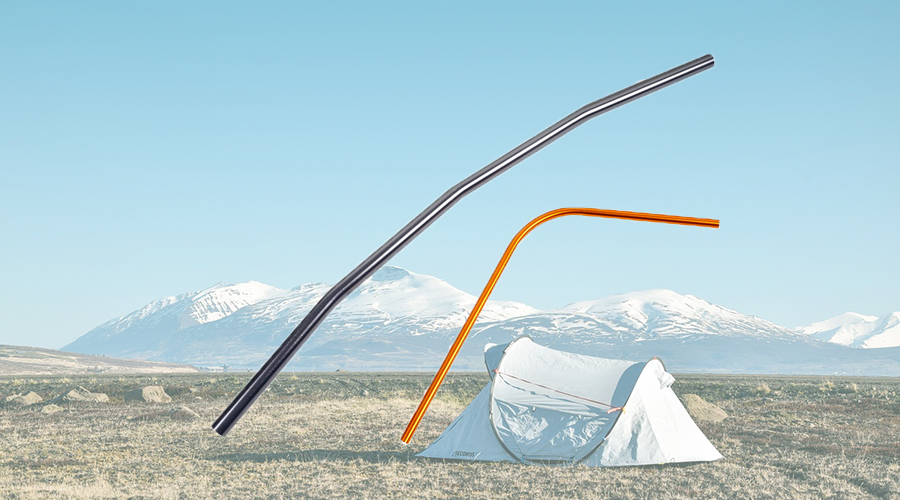
Architectural tent frames and specific dome structures often require pre-curved pole sections. Manufacturers use mandrel bending and roll bending techniques to achieve these sweeps. Roll bending passes the tube through three adjustable rollers to create large, sweeping curves. Mandrel bending uses an internal support rod to prevent the tube from collapsing or wrinkling while being pulled around a bending die for tighter radii.
Creating a reliable custom bent tent pole involves significant risks. Bending stretches the outside of the curve and compresses the inside. This can cause material micro-fracturing if the bend radius is too tight for the specific alloy and temper. Manufacturers mitigate this by calculating precise bend radii, accounting for material springback, and sometimes performing the bending operation before the final artificial aging (tempering) process.
Raw aluminum naturally forms a thin oxide layer when exposed to air, providing basic corrosion resistance. However, outdoor environments subject tent poles to harsh conditions that quickly degrade unprotected metal. Surface finishing is a critical final step in the manufacturing process.
Electrochemical anodizing thickens the natural oxide layer, protecting the aluminum from harsh elements like saltwater, UV exposure, and constant moisture. The process involves submerging the fabricated poles in a sulfuric acid electrolyte bath and passing an electric current through the solution. The aluminum acts as the anode. This controlled oxidation creates a hard, durable, and corrosion-resistant finish that is fully integrated with the underlying metal, meaning it cannot peel or flake off like paint.
Manufacturers typically offer different levels of anodizing based on the required durability. Standard anodizing (Type II) provides excellent corrosion resistance and allows for vibrant color dyeing. Hardcoat anodizing (Type III) creates a much thicker, denser oxide layer, offering superior abrasion resistance for extreme environments.
Feature |
Standard Anodizing (Type II) |
Hardcoat Anodizing (Type III) |
|---|---|---|
Coating Thickness |
0.1 to 1.0 mil |
1.0 to 3.0 mils |
Abrasion Resistance |
Moderate |
Excellent (Similar to hardened steel) |
Color Options |
Wide variety of vibrant dyes |
Limited (Usually dark gray, black, or bronze) |
Dielectric Strength |
Low |
High |
Best Application |
Backpacking tents, general camping |
Expedition tents, military shelters, high-wear joints |
The anodized oxide layer is highly porous before the final sealing step. Manufacturers introduce organic or inorganic dyes into these pores. This allows OEMs to match specific brand colors or color-code different pole lengths for easier tent setup. Color anodizing integrates the pigment directly into the metal surface. A final sealing bath, often using nickel acetate or hot water, closes the pores, locking in the color and providing a permanent aesthetic solution without adding weight.
Selecting the right manufacturing partner determines the success of the product launch. Procurement teams must look beyond unit cost and evaluate the supplier's technical capabilities, quality control infrastructure, and supply chain scalability.
Boutique gear brands and small-to-medium enterprises face specific sourcing challenges. High-volume extrusion mills often demand massive Minimum Order Quantities that exceed the needs of a specialized tent run. Negotiating these minimums requires finding suppliers capable of scaling from prototype batches to medium-volume manufacturing without sacrificing quality or imposing prohibitive setup fees.
Buyers should demand strict testing protocols from their manufacturing partners to ensure field reliability.
Ultrasonic Wall Thickness Measurement: Ensures consistency across the entire length of the extrusion, preventing weak spots.
Tensile Strength Testing: Verifies the alloy and temper meet the required load capacity using destructive pull tests.
Dimensional Tolerance Checks: Utilizes precision micrometers, optical comparators, and go/no-go gauges to confirm exact OD and ID specifications.
Eddy Current Testing: Detects invisible surface flaws or internal seam weld defects in the extruded profile.
Utilizing small-batch machine shops offers initial flexibility but introduces severe risks when production volumes increase. These shops often lack the capacity to handle sudden spikes in demand. Vertically integrated, high-volume extrusion facilities provide stability. They control the raw material supply, the extrusion schedule, and the secondary fabrication, buffering the OEM against broader supply chain disruptions.
Common pitfalls derail new product introductions. Misaligned tooling costs for custom dies can break a project budget. Extended lead times for specialized alloys delay market entry. Prototyping before full-scale production is mandatory. Engineering teams must test physical samples under real-world loads to verify the extrusion profile, wall thickness, and fabrication tolerances before committing to a massive production run. First Article Inspection reports provide documented proof that the initial run meets all engineering specifications.
Execute the following steps to finalize your structural component sourcing and move into production:
Finalize CAD drawings, detailing exact dimensional tolerances for outer diameters, inner diameters, and ferrule insertion points.
Define environmental load requirements to select the appropriate 6000 or 7000 series alloy and temper.
Document all secondary fabrication needs, including specific cut lengths, drill hole locations, and required bend radii.
Request a custom tubing quotation from an integrated manufacturer to begin the technical evaluation.
Initiate a prototyping phase to physically test the components before authorizing full-scale production.
A: The ideal alloy depends entirely on the application. 7000-series aluminum, particularly 7075, provides maximum strength-to-weight ratios for lightweight backpacking and expedition tents. 6000-series alloys, like 6061, offer excellent corrosion resistance and extrudability, making them the preferred choice for heavy-duty event tents and structural frames.
A: Extrusion uses a hydraulic press to push heated, malleable aluminum through a steel die to form a specific profile. Drawing pulls cold extruded metal through a secondary die and over a mandrel. Drawing thins the walls, tightens dimensional tolerances, and increases structural strength through cold working.
A: Yes. Manufacturers use mandrel or roll bending techniques to create pre-curved frames. You must specify exact bend radii. The manufacturer will utilize proper temper controls and bend calculations to prevent material micro-fracturing or structural failure during the forming process.
A: Baseline industry expectations vary by the manufacturing process. Standard extrusion tolerances for outer and inner diameters typically range from ±0.15mm. Cold drawing achieves much tighter tolerances, often reaching ±0.05mm, which is required for precision ferrule inserts and seamless pole assembly.
A: Look for vertically integrated suppliers rather than standalone machine shops. Integrated manufacturers handle both extrusion and fabrication, offering better quality control. Discuss Minimum Order Quantities early and always request a prototyping run before committing to medium-volume production.
A: Surface treatments like electrochemical anodizing thicken the natural oxide layer on the aluminum. This hard, integrated coating prevents oxidation and mechanical wear in harsh outdoor environments. It protects the metal against saltwater corrosion, UV degradation, and general abrasion.
A: You must provide the specific alloy grade, required temper, outer diameter, wall thickness, and overall length. Include detailed CAD drawings for any secondary fabrication needs like cross-drilling or bending, along with your estimated production volumes and color anodizing requirements.