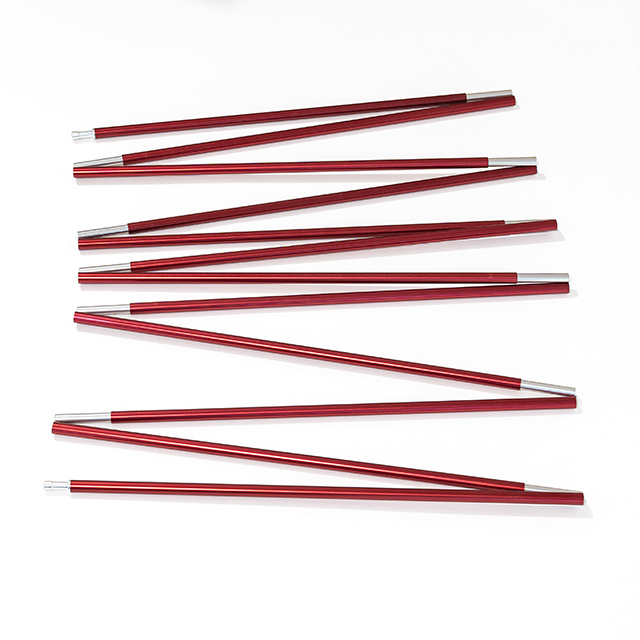
The structural integrity of any tent or temporary shelter relies entirely on its pole architecture. Material failure under dynamic wind loading or snow accumulation leads directly to catastrophic collapse. Product engineers and manufacturers must constantly balance tensile strength, yield strength, overall weight, and production costs when sourcing materials. Selecting the wrong alloy can result in poles that snap under stress or permanently deform during a storm. Incorrect material choices also inflate manufacturing costs beyond market viability. You need a technical breakdown of 7001, 7075, and 6061 aluminum alloys to establish an evidence-based framework. This engineering data helps you source the correct aluminum tent pole tubing. You can match the metal directly to specific shelter geometries, strength-to-weight requirements, and field performance expectations. Understanding the specific metallurgical properties of these alloys prevents costly redesigns and ensures reliable field performance in extreme weather conditions.
6061 Aluminum: The budget-friendly, highly machinable baseline. Suitable for heavy-duty, static structures (car camping, canopies) but prone to permanent deformation under high-stress deflection.
7075 Aluminum: Offers the highest ultimate tensile strength and rigidity. Ideal for static load-bearing and rigid geometries, but its lower yield strength means it breaks before much deflection, snapping rather than bending under extreme dynamic stress.
7001 Aluminum: The aerospace-grade industry standard for lightweight, high-wind applications. Features the highest yield strength among common 7000-series alloys, allowing it to flex significantly and return to true without permanent deformation.
Temper Matters: The structural properties of these alloys are heavily dependent on their temper (e.g., T6, T9), which dictates the final hardness, bend resistance, and strength of the drawn tubing.
Field Repairability: The failure mode of the alloy dictates backcountry survival; softer or high-yield poles that bend can sometimes be field-repaired, whereas ultra-stiff poles that snap cannot.
Success Criteria for Aluminum Tent Pole Tubing
Defining the baseline engineering requirements for shelter frames is mandatory before evaluating specific materials. Tents operate in highly unpredictable environments. They face dynamic lateral loads from wind gusts that change direction rapidly. They endure static vertical crushing forces from snow accumulation and ice loads. You must understand exactly how different metals react to these distinct forces to engineer a reliable shelter.
Yield Strength vs. Ultimate Tensile Strength
Engineers must distinguish clearly between yield strength and ultimate tensile strength. Yield strength determines how far a pole can bend before it permanently deforms. When a pole exceeds its yield strength, it takes a "set." It loses its original shape, compromising the geometric tension of the entire tent. Tensile strength determines the exact point of catastrophic failure. This is the moment the pole physically fractures and snaps in half.
High yield strength is heavily prioritized over ultimate tensile strength in dynamic wind environments. Tents must flex under severe wind gusts to survive. They absorb the kinetic energy of the wind by bending, effectively spilling the wind over the canopy. They must then spring back to their original shape when the wind stops. A pole with high tensile strength but low yield strength will resist bending initially. Once pushed past its limit, it will snap suddenly, destroying the shelter.
Weight-to-Strength Ratios
Wall thickness and outside diameter (OD) interact directly with alloy density. These physical dimensions dictate the final pack weight of the shelter. Thicker walls increase the overall strength of the pole and provide better resistance to denting. However, thicker walls add significant weight to the final product, making it unsuitable for human-powered transport. High-strength aerospace alloys allow manufacturers to use thinner walls. This reduces overall weight while maintaining necessary structural rigidity.
You must calculate the exact load requirements of the tent canopy. A massive family cabin tent requires larger OD tubing to span wide gaps and support heavy fabric. A solo backpacking tent requires minimal OD tubing to save weight. The chosen alloy dictates how thin you can draw the tubing before it becomes fragile and susceptible to crushing at the ferrule joints.
Field Repairability and Failure Modes
Evaluate how the material behaves when pushed past its absolute limits. Failure modes dictate backcountry survival. A permanently bent pole compromises the tent's shape and reduces internal volume. However, you can often carefully bend it back into a usable form using a rock or a boot. This field repair allows users to survive the night and keep the fabric tensioned.
Conversely, a catastrophic snap destroys the shelter structure entirely. A snapped pole creates jagged metal edges that tear through the rainfly fabric. You cannot easily repair a shattered pole in the field without a dedicated metal splint and heavy tape. The way a pole fails is just as important as the force required to break it. Designing for a graceful failure mode saves lives in extreme conditions.
Environmental Durability
Evaluate baseline corrosion resistance requirements for outdoor applications. Aluminum naturally resists deep, structural rust unlike steel. However, raw tubing remains highly vulnerable to surface oxidation. Continuous exposure to rain, morning dew, and coastal salt spray degrades the metal over time. Galvanic corrosion also occurs where the aluminum meets brass or steel fittings.
Anodization provides a critical protective layer. This electrochemical process thickens the natural oxide layer on the surface of the metal. It prevents degradation from moisture and UV exposure while adding surface hardness. You must mandate high-quality anodization for any tubing destined for outdoor use. Bare aluminum will pit, corrode, and eventually fail at the high-stress joint connections.
6061 Aluminum: The Budget and Workability Baseline
This commercial-grade alloy serves as the foundation for many standard structural applications. It provides a reliable baseline for evaluating higher-tier aerospace metals. You will find this material in countless consumer goods, from bicycle frames to standard hardware store extrusions.
Material Composition and Properties
This alloy utilizes magnesium and silicon as its primary alloying elements. The addition of these elements makes the metal highly workable and easy to extrude through complex dies. Manufacturers commonly use the standard T6 temper. This specific heat treatment process increases the overall hardness and structural stability of the raw metal. The T6 temper involves solution heat treating followed by artificial aging in a controlled oven.
Performance Profile
This material provides excellent natural corrosion resistance. It stands up well to moisture even before anodization, making it forgiving in damp storage conditions. It offers exceptional affordability for high-volume manufacturing. You can easily machine, drill, and cut the tubing. It accepts shock-cord routing holes without micro-cracking at the drill site.
However, it features significantly lower tensile and yield strength compared to aerospace-grade 7000-series alternatives. It will permanently deform under high-stress deflection. It lacks the spring-like memory required for extreme wind loads. If a heavy gust hits a 6061 frame, the poles will likely stay bent after the wind dies down.
Ideal Use Cases
We recommend this alloy for budget-tier consumer tents and recreational shade structures. It works exceptionally well for heavy canvas wall tents where the sheer mass of the fabric requires thick, bulky frames. Car camping structures benefit from its low cost and ease of replacement. These specific applications allow thicker tubing walls. The thicker walls easily compensate for the lower baseline material strength. Pack weight is rarely a primary concern for vehicle-supported camping.
Implementation Risks
Warn your design team against using 6061 in lightweight backpacking designs. Address a very common Make Your Own Gear (MYOG) pitfall. Cheap, standard 6061 hardware store tubing is nowhere near as strong or durable as purpose-drawn tent pole tubing. Standard commercial pipes will permanently bend under moderate wind loads. They lack the specific drawing processes and tight tolerances used for structural tent frames.
7075 Aluminum Tent Pole: Maximum Rigidity and Tensile Strength
This alloy represents a massive step up in structural rigidity. It leaves commercial grades behind and enters the realm of aerospace engineering. It handles immense static loads with ease, making it a favorite for specific, rigid shelter geometries.
Material Composition and Properties
This alloy features a highly zinc-heavy composition. It originated directly in the aerospace industry for high-stress aircraft components like wing spars. The zinc addition creates an incredibly dense, hard grain structure. Manufacturers often utilize specific aerospace-grade tempers like 7075-T9. This aggressive temper maximizes the hardness and structural rigidity of the final drawn tubing, pushing the metal to its absolute physical limits.
Performance Profile
It delivers massive ultimate tensile strength. The physical strength actually rivals some lower-grade structural steels. This provides extreme rigidity for structural frames. It refuses to compress under heavy top-down loads, making it highly resistant to buckling under snow.
The core engineering trade-off is elasticity. High rigidity leads directly to lower elasticity. Under extreme deflection, a 7075 aluminum tent pole breaks before much deflection. It cannot bend into tight hoops. It is prone to catastrophic snapping rather than bending under extreme dynamic stress. When it fails, it sounds like a gunshot and shatters.
Ideal Use Cases
We recommend this material for rigid geodesic expedition domes. These domes rely on intersecting triangles for strength. Triangles require stiff, unyielding sides to distribute loads evenly across the hubs. It serves perfectly as ultralight rigid struts for awnings and cot frames. Trekking pole-supported tent structures benefit greatly from its stiffness, as the vertical poles must not bow under the tension of the guylines. Static snow-load environments require this level of unyielding vertical support.
Implementation Risks
Address the lower natural corrosion resistance of 7075. The high zinc content makes it more susceptible to galvanic corrosion, especially in marine environments. It requires high-quality, thick anodizing to survive outdoor moisture. You also face the severe risk of sudden, unrepairable pole failure. Highly flexible hoop-tent designs should avoid this rigid material entirely. Forcing 7075 into a tight arc pre-stresses the metal and invites premature failure at the ferrule joints.
7001 Aluminum Tent Pole: The Industry Standard for Flexibility
This specific alloy dominates the premium outdoor equipment market. It provides the exact mechanical properties required for modern, lightweight shelter architectures. It balances strength with critical flexibility, allowing tents to survive storms by yielding rather than fighting the wind.
Material Composition and Properties
This alloy utilizes highly specific zinc and magnesium ratios. These precise ratios differentiate it clearly from 7075. It contains slightly less zinc, altering its grain structure to allow for more movement between the molecular layers. Manufacturers rely heavily on the standard 7001-T6 temper. This specific heat treatment balances extreme strength with the necessary flexibility for dynamic bending.
Performance Profile
This material boasts superior yield strength. Note that 7001 actually has the highest yield strength of the entire 7000 series. It outperforms both 7075 and 7178 in this specific, critical metric. High yield strength acts like a powerful spring, storing kinetic energy without permanently altering the metal's shape.
A 7001 aluminum tent pole can undergo extreme deflection. It bends deeply under wind pressure and returns to its original shape without snapping. It avoids taking a permanent set even after days of high winds. Emphasize its exceptional strength-to-weight ratio. It makes shelter frames both incredibly lightweight and highly durable against storm forces.
Ideal Use Cases
We highly recommend this alloy for premium ultralight backpacking tents. Tunnel tents and hoop designs rely entirely on its unique properties. These designs require poles to bend into permanent semi-circles. Any architecture requiring pre-bent poles demands this specific material. High flexibility remains its greatest structural asset in the field, allowing the tent to flatten out in a gale and pop back up unharmed.
Comparative Value
Engineers generally prefer 7001 over 7075 for modern, lightweight tent architectures. The 7075 alloy may boast a higher ultimate tensile strength. However, the flexibility of 7001 prevents catastrophic field failures. Tents survive wind by yielding, not by resisting rigidly. If 7001 does take a permanent bend in a hurricane-force gust, it remains forgiving. You can carefully bend it back in the field to restore the shelter, whereas 7075 would have simply shattered.
Head-to-Head Technical Evaluation: 7001 vs. 7075 vs. 6061
Comparing these metals side-by-side reveals their distinct engineering applications. You cannot substitute one for another without fundamentally altering the performance of the tent. Each metal requires different manufacturing approaches, tooling setups, and quality control metrics.
Mechanical Properties Matrix
The following table outlines the baseline mechanical differences. Values represent standard T6/T9 tempers commonly used in tubing production. These metrics dictate how the metal behaves under stress in the field.
Evaluate the ease of drawing the tubing. Drawing aluminum into thin-walled pipes requires immense force. Cutting the tubes and integrating ferrules changes based on the alloy. Stiffer metals resist modification and wear out cutting blades faster. Drilling holes for shock-cord inserts requires sharper tooling and slower feed rates for 7000-series metals to prevent burrs.
Manufacturers struggle to bend 7075 into permanent arcs without micro-fracturing the grain structure. It resists forming and often requires heat to bend safely. Conversely, 7001 and 6061 accept pre-bent geometries much easier during the manufacturing process. This makes 7001 the clear choice for arched pole segments and complex hub connections.
Cost-to-Performance Scalability
Frame 6061 as the low-cost volume leader. It dominates the mass-market retail space. The raw billets cost less, and the extrusion tools last longer. The 7001 and 7075 alloys represent premium investments. They wear down manufacturing tooling faster due to their hardness. They require higher retail price points to justify the increased production expenses, but they deliver the necessary performance for extreme environments.
Aluminum Alloy Selection for Tent Poles: A Decision Framework
Selecting the right metal requires a systematic approach. You must align the physical properties of the tubing with the intended use case. Guesswork leads to product returns, negative reviews, and dangerous field failures.
Assessing Shelter Geometry
Evaluate the core structure of your design. Apply this strict rule: If the design relies on rigid triangles (like a geodesic dome), evaluate 7075. Triangles need stiff sides to distribute loads. If the design relies on tensioned arcs (like tunnels or dome hoops), mandate 7001. Arcs need to flex and absorb wind energy. If weight is irrelevant and budget is strict, default to 6061. Proper aluminum alloy selection for tent poles dictates the ultimate survival of the shelter.
Target Market Alignment
Map the chosen alloys directly to consumer expectations. Amateur MYOG builders need accessible materials that cut easily with hand tools. Budget family campers prioritize low retail costs over pack weight. They drive to the campsite, making 6061 perfectly acceptable. Mountaineers demand uncompromising strength and field repairability. They carry the tent on their backs through alpine environments. Match the specific metal to the user's exact survival and transport requirements.
Engineering Workflow
Define the exact geometry of the shelter to determine if the poles will remain straight or require pre-bending.
Calculate the maximum anticipated wind and snow loads to establish the required yield strength.
Select the alloy that meets the strength requirements while keeping the total frame weight within the target pack weight.
Specify the exact temper required to maximize the chosen alloy's performance characteristics.
Design the ferrule joints and shock-cord routing to minimize stress risers in the final tubing.
Conclusion
Follow these actionable steps to finalize your material sourcing strategy:
Analyze your shelter's primary geometry to determine if it requires rigid linear support or flexible arc tension.
Calculate the maximum acceptable pack weight to establish strict baseline wall thickness and outer diameter requirements.
Specify high-quality anodization for all tubing orders to ensure long-term environmental durability against moisture and salt.
Select the appropriate alloy temper alongside the metal grade to maximize the specific yield or tensile properties your design demands.
FAQ
Q: What kind of pole is strongest for extreme snow loads?
A: Stiff aerospace-grade alloys like 7075 provide the highest ultimate tensile strength. They resist downward crushing forces much better than flexible alternatives. This makes them ideal for static, heavy snow accumulation on rigid geodesic domes.
Q: Can I fix a bent tent pole in the backcountry?
A: You can often field-repair softer or high-yield alloys like 7001. Carefully apply counter-pressure to straighten the bend enough to support the tent. Ultra-stiff poles that snap completely cannot be repaired without a dedicated metal splint.
Q: Why do ultralight tents use flexible poles instead of rigid ones?
A: Ultralight designs rely on tensioned arcs to create structural volume. Flexible poles bend into hoops without snapping. They absorb dynamic wind gusts by flexing and returning to their original shape, preventing fabric tears.
Q: Is hardware store aluminum tubing safe for custom tents?
A: Standard commercial 6061 tubing lacks the necessary yield strength for reliable outdoor shelters. It will permanently bend under moderate wind loads. Always source purpose-drawn tent pole tubing for reliable structural integrity.
Q: How does temper affect the final aluminum tubing?
A: Tempering involves specific heat treatments that alter the metal's internal grain structure. This process dictates the final hardness, bend resistance, and overall strength. A proper T6 or T9 temper drastically improves the performance of the raw alloy.
Q: Does anodizing add weight to the tent poles?
A: Anodizing adds a microscopic layer of oxidation to the surface of the metal. The weight increase is completely negligible. This electrochemical process is absolutely necessary to protect the metal from corrosion, salt, and moisture.
We do research and trends of each country to give you the best possible product that will sell in your country. We have been the gold supplier of International Committee Red Cross since 2012.